
Can drought-induced threats be turned into adaptation opportunities? This article analyses the unexpected vulnerabilities revealed by a long-lasting period of drought events across the Po river basin district in Italy from 2003 to 2012, and proposes four policy options to reduce the water scarcity and drought risk at river district basin level.
This article looks at vertical and horizontal integration in the English and Welsh water industries, estimating the costs and benefits of breaking up monopolies. The results of the analysis suggest that there is no real reason why water and sewage industries should be integrated.
The European gas industry has experienced an extraordinary success over the last decades. Gas experts from the academia, international organizations and the industry discuss mid- to long-term challenges and opportunities for European gas markets in order to shed light on a market characterized by growing uncertainty and volatility.
BGs are clusters of legally autonomous firms within and across national borders. They represent a lion's share of value added generation in developing and developed economies, yet they are poorly investigated. The article shows how BGs adapt their organization to various institutional environments and how various organization strategies affect performance.
Philosophical literature on climate change explains how to redress climate injustice between generations, but it says little on why we should do so. In this article Furio Cerutti, political philosopher and professor emeritus at the University of Florence, analyses what motivations human beings and state institutions may have for worrying about climate change.
Human-induced temperature increase is amplified in the Arctic, as well as its effects on the ice cover. With the aid of an Arctic "death spiral”, Prof. Peter Wadhams, oceanographer and glaciologist at Cambridge University, discusses scientific evidence and his personal experience of changes in the Arctic in the last decades.
Smoking, like many health-related behaviors, has "social" aspects. This article discusses how accounting for the external effects of smoking (second-hand smoke) and concern for the health of relatives and friends can shed light on recent trends in smoking behavior and possibly suggest anti-smoking policies in view of the intrinsic network effects.
Would universal access to modern sources of energy like electricity and clean cooking fuels significantly increase CO2 emissions? This article briefly describes a methodology for the formal assessment of this issue by means of a model of current and future energy consumption.
Climate geoengineering, i.e. the deliberate reduction of incoming solar radiation, is receiving increased interest as an alternative or complementary climate strategy to reduce greenhouse gas emissions. But can it justify a delay in the abatement effort from an economic point of view, even under optimistic assumptions?
Climate change is still not widely recognized as a burning issue. Despite illusions, climate skepticism is not dead yet but only evolving, shaped in different forms, each with different underlying reasons and meanings. Ottmar Edenhofer, co-chair of IPCC Working Group III, identifies five types of climate skepticisms and one possible pathway to tackle them.
As the world's population and energy consumption increase, more and more natural resources are needed to keep up with its pace of growth. This article describes what international institutions and the EU are doing to pursue an economic growth paradigm that is friendly to the earth’s ecosystem and that can at the same time contribute to poverty alleviation.
In recent years green growth has become a focal point of cooperation between Italy and China, and in the year 2000 the Italian Ministry for the Environment, Land and Sea launched the Sino-Italian Cooperation Program for Environmental Protection with some Chinese institutions and universities. This article describes its achievements and future objectives.
At a time when the world is recovering from the financial crisis and begins to explore new approaches to sustainable development, this article presents China’s sustainable development policy and discusses how financial institutions, and the China Development Bank in particular, can help promote a green economy.
The geographical distribution of African natural gas resources is going through a period of profound change as new gas discoveries in East Africa emerge to reshape the continent's energy landscape. Two countries have already emerged as key-players of this new African natural gas renaissance: Mozambique and Tanzania.
This article analyses the economic system of the Bolzano Province in Italy’s Alto Adige region to understand its relationships with the ecosphere. A model based on Economic Input–Output, combined with Life Cycle Assessment, is used to assess the impacts related to air emissions, energy consumption and waste generation by economic activities.
The first conference of the newly-born Italian Association of Environment and Resource Economists (IAERE) took place in Ferrara last February 8-9, 2013. Professor Marzio Galeotti, Chairman of the Association, describes its main goals and gives a brief overview of the event.
Anil Markandya, Scientific director of the Basque Center for Climate Change, discusses environmental fiscal reform and provides a short overview of his work on some of the main concerns with this reform, such as its effects on competitiveness and feasibility.
Is there a causal relationship between oil prices and autocracy? This article argues the importance of going beyond deterministic formulations to investigate this relationship, and to use the analytical tools provided by the Rentier State Theory to gain a better understanding of the Arab uprisings and their aftermath.
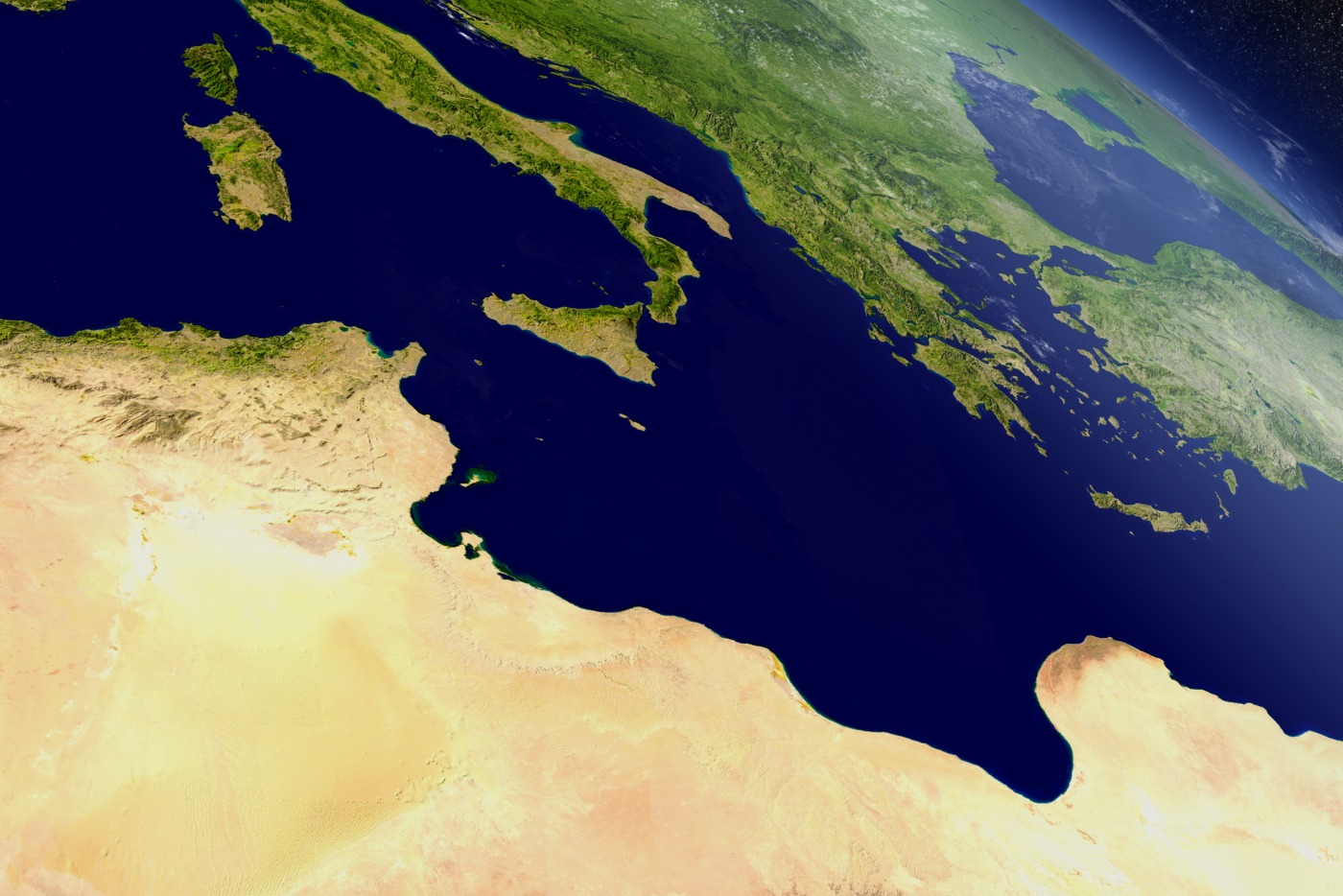
How is the Eastern Mediterranean energy landscape changing? This article provides an overview on new regional developments and proposes a critical discussion of the market opportunities and geopolitical risks related to the potential emergence of a new Eastern Mediterranean Energy Corridor.
"We can no longer use the climate of the past as a guide to design the investments of the future" states Raffaello Cervigini, Lead Economist at The World Bank in this interview granted to Re3. Extreme events are becoming increasingly frequent particularly in Sub Saharan Africa, and it is of utmost importance to raise the quality and effectiveness of investments in key sectors such as agriculture, transport and urban development, in order to ensure their resilience to a changing climate.
Greenhouse gas emissions and their implications for future climate conditions will be shaped by mitigation decisions based on climate projections involving uncertainty. This article investigates the optimal timing of climate policy adoption by focusing on ambiguity in climate damage cost assessments and on the limited time to achieve climate policy targets.
China’s global quest for resources – in particular, oil and natural gas - has received unprecedented worldwide attention. But are the stakes raised unnecessarily high? In this article ZhongXiang Zhang, Distinguished Professor and Chair at Fudan University, China seeks to clarify these points.
Is the German example able to show the path for the decarbonisation of Europe? Andreas Löschel from ZEW starts from analysing the current German renewables energy market, giving some prospects on its likely future development, to then broaden the picture on Europe's desire for decarbonisation.
Money matters, but is that all? This article presents evidence that social incentives can boost productivity in sectors that rely on pro-social behaviour such as health, education, and social care. It argues that this may help explain the growing popularity of Corporate Social Responsibility programmes within firms.
This article investigates the signaling role of environmental policy in promoting, or hindering, the ability of a monopolist to practice entry deterrence, showing that environmental policy can facilitate the incumbent firm’s concealment of information from potential entrants.
This article by FEEM researchers Fabio Eboli and Marinella Davide assesses the European Union's positive performance in achieving its own Kyoto Protocol target, unlike the other Annex I countries. The analysis highlights a quite heterogeneous situation across Member States. Nevertheless, the last COP shows that EU is willing to lead future climate change strategy.
After thirteen days of negotiations at the 18th UNFCCC Conference in Doha, Qatar, from November 26 to December 8, 2012, the parties managed to agree on a set of decisions to move the process forward and to save the Kyoto Protocol, at least in principle.
A focus on mobility, the kilometres travelled using light duty vehicles, and climate policy is motivated by the persistence of strong demand for personal mobility. This article discusses recent research conducted at FEEM on the future of private vehicle travel and the achievement of different climate policy targets, with a particular focus on non-OECD regions.
Overweight and obesity are social plagues of modern societies. The article draws from a research study undertaken by the authors showing that the scale of such a phenomenon is due to the effects of peers on individual weight-related behaviour, as well as to the limits on dynamic behavior imposed by habits.
Interviewed by Re3, EAERE president Karine Nyborg discusses the evolution of the Association since the start of its activities in 1990. A set of video interviews to EAERE 2012 conference keynote speakers and videos of the policy sessions complete the sketch.
Einar Hope explains why Energy Economists should adopt an interdisciplinary approach in their research, adding that universities should request multidisciplinary research as part of the qualification system for academic careers.
Does the interaction of diverse cultures hamper or facilitate the creation of new ideas? The article summarizes the results of a study investigating the role of ethnic heterogeneity of the labour force in the creation of new knowledge.
The Global Energy Assessment is a major initiative launched at the RIO+20 conference to assess worldwide global energy challenges. Interviewed by FEEM, Thomas B. Johansson, Executive Committee Co-Chair of the GEA, and Nebojsa Nakicenovic, Deputy Director of the International Institute for Applied Systems Analysis, give an overview of the GEA report.
Francesco Gattei from Eni gives an overview of the industry perspective on the important issue of energy security, topic of his talk at the plenary session "Energy supply and security" at the 12th IAEE European Energy Conference.
Ian J. Bateman, Head of Economics for the UK-National Ecosystem Assessment, summarises in a non-technical language the rationale for undertaking the first analysis of the UK's natural environment in terms of the benefits it provides to society and continuing economic prosperity.
The article investigates the economic and climate change mitigation potential of consumer adoption of smart energy behaviours enabled by smart-grids and advanced-metering systems. The results indicate that consumer empowerment and involvement induce important and efficient benefits to the electric power sector.
This article investigates global biodiversity regulation as a bargaining game, where biodiversity rich countries (the “BD states") and research& development rich countries (the “R&D states”) must find a way to cooperate that is perceived as fair and reasonable by both parties.
In this brief interview with FEEM, Bruno Latour explains why, in his opinion, international negotiations for environmental protection (e.g. Rio+20, UNFCC COPs, etc..) continue to fail. This has to do with an issue of proper representation of different interests, of scale, and because of the substantial separation between science and policy.
Carlo Andrea Bollino, Vice president of the Italian Association of Energy Economists and General Conference Chair of the 12th IAEE European Energy Conference, gives an overview of this year's main themes and challenges tackled during the conference.
This article aims to provide a comprehensive framework of understanding of the growing strategic relevance of Turkey for both the EU and the overall Euro-Mediterranean region. In particular, the focus is on EU-Turkey energy relations and on the crucial role of natural gas and renewable energy in enhancing energy cooperation between the two players.
As changes in climate-related stocks have consequences spanning over centuries or possibly millennia to the future, to reconcile the discounting of such far-distant impacts and realism of the shorter-term decisions, hyperbolic time-preferences are here considered in a climate-economy model.
Vulnerability to climate change is an increasingly relevant issue for urban policy makers. Comparing the experiences of several cities, this article examines the levels of administrative adaptation planning, tools and information used in making policy choices, adaptation measures, and the roles of governance and finance in urban adaptation to climate change.
Green growth is about making growth processes resource-efficient, cleaner and more resilient without necessarily slowing them. The work presented aims at clarifying these concepts in an analytical framework and at proposing foundations for green growth.
The article briefly reports the information collected through an expert elicitation protocol on the future costs of biofuels, the potential role of RD&D (Research, Development and Demonstration) programs and what non-technical barriers to diffusion should be considered when designing renewable energy policies.
International treaties and cooperation processes require prospective member countries to achieve given standards in either economic, social or environmental quality. This article explores the effect of such standards on domestic political preferences to interpret shifts in political outcomes in the Euro-zone.
In the aftermath of Rio+20, failures and successes can be assessed: if the reform of UNEP, the battle against environmentally harmful subsidies and the acknowledgement of Green Growth as a pillar of Sustainable Development fall below expectations, the voluntary pledges made in Rio and the post-2015 process for Sustainable Development Goals leave a glimmer of hope.
The UNCSD Rio+20 meeting is expected to define the future paradigms of sustainable development. This article presents an overview of the main obstacles toward achieving sustainable development, highlighting the limitations of the current measurement approaches.
While the earth summit Rio+20 is taking place, top scholars from IEA, KTH, CEPS, IIASA and EBRD discuss the main issues concerning Energy poverty which should be kept at the centre of the political and scientific debate.
In these interviews on the key topics under discussion at Rio+20, Derek Eaton, co-author of UNEP's Green Economy Report, presents an overview of the Green Economy principles, whilst Professor Ottmar Edenhoffer, co-chair of IPCC WGIII, warns that any step towards sustainability must consider putting a price on carbon.
What drives people to emigrate? How does uncertainty affect migration choice? Do networks mitigate its effects? The results of the study described in this article show that by controlling the information on the immigration stock, governments can delay the mass entry of immigrants, maintaining the required stock both in the long and in the short run.
Climate change costs and benefits for regional ecosystems are difficult to quantify. Using New York State as a case study, this article identifies which components of the ecosystems could face the greatest costs due to climate change, and suggests the areas that require more detailed investigation of impacts and adaptation options.
What happens when resource owners decide to extract their resources faster in order to protect themselves from future stricter climate policies? In this article Ines Österle reviews a selection of contributions to the Green Paradox literature and discusses the relevance of the theory for real world climate policies.
Over the last decade local communities in Sub-Saharan Africa, South America, Australia and Oceania have been pressed by multinationals to vacate their land. The Rome agreement, signed on May 11, 2012 by 124 states, calls for economic players to abide by the principles of common law and to negotiate property transactions with the local communities.
How can policies and programs influence consumers’ perception and enable investments in energy efficiency in those countries where the population faces financial constraints? This article presents a candidate policy that provides up-front funds to residential property owners, allowing them to make energy-efficiency improvements to their buildings.
The recent economic crisis has brought to light the importance of opportunities that lie in the newly emerging markets (South). The article introduces the notion of global innovation networks and presents policy options to gain from challenges faced from the internationalisation of innovation activities.
Between now and 2050, humanity must face a double problem: the growing scarcity of oil and the accumulation of greenhouse gases in the atmosphere. Solving this complicated riddle may appear an even harder task after the Fukushima disaster. This article focuses on a joint interdisciplinary research effort to solve this puzzle.
Standard public good games are concerned with the creation of a collective gain. Climate change, however, is about avoiding an uncertain public bad. This has been framed as a “collective-risk social dilemma” of sequential contributions to a public climate fund aimed at avoiding a probabilistic loss arising if the target is missed.
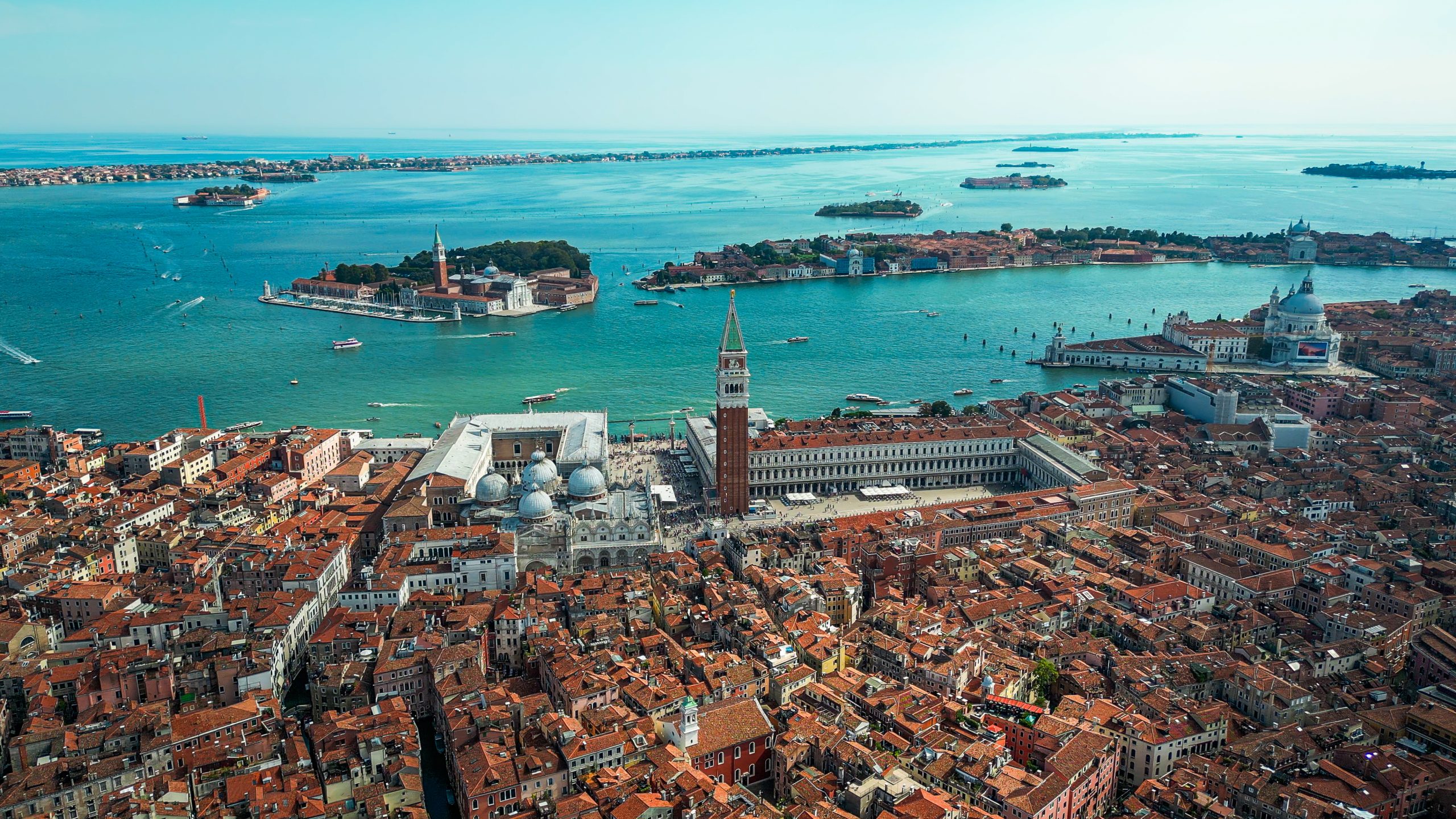
In his speech at the Energy Think conference in Venice “Sustainable Energy for All” on March 13th, Fatih Birol, chief economist of the IEA, provided several insights on the critical trends of climate change, nuclear power, and energy poverty arising from the latest World Energy Outlook.
The ever growing flows of people, goods, images and ideas at global level are changing the way we see and experience diversity. The question of whether and how we can live and prosper together while keeping and enjoying our differences is becoming the fundamental issue of our time. This is the question at the core of this article.
The European gas industry has experienced over the last decades an extraordinary success. Natural gas could well continue to play an important -and even increasing- role in the future European energy mix. However, some actions will be necessary to reinforce the overall EU gas security of supply architecture.
On the way to Rio + 20, international climate expert Robert N. Stavins briefly reviews some key points from twenty years of history of international climate negotiations, from the Rio Earth Summit in 1992 to the Durban Climate Conference in 2011, to explain how the “Durban Platform for Enhanced Action” has opened an important window in climate talks.
China’s impressive economic growth, fuelled by its rapid industrial expansion in recent years, has caused a growing appetite for natural resources and energy. High energy intensity of output, coupled with an even higher carbon intensity of energy, have given China a crucial role in determining the world’s future climate.
In the past decade, financial institutions have assumed an ever greater role in energy derivatives (or "paper") markets. Recent studies provide evidence of this "financialization". This article summarizes their findings, identifies questions that remain unanswered, and discusses what data or theoretical breakthroughs could shed light on these issues.
The sharp swings in oil prices and the marked increase in volatility during the latest 2008-2009 price cycle and more recently in 2011 raise concerns about the role of speculators in the oil market. Observers in the oil industry and in academic institutions have opposing views on the key drivers of oil prices.
If emissions continue to grow as they have over the last century, the consequences on the ecologic and human systems could be daunting. The key challenge of policy makers is the choice of economically efficient regulations based on analyses that allow reliable and robust comparisons of the costs and benefits of a given policy.
Over the past two decades there has been an increase in Corporate Social Responsibility (CSR) firms in OECD countries, although socially responsible behaviour is costly. Why, then, is the number of these firms on the increase? What drives companies to obtain this certification? Is there a link between group membership in CSR and better firm performance?
For some years now, the price of oil has been out of control. None of the industry players are able to set the price level or influence its movement. Some consumers still believe that the oil price is determined within the context of the power balance between producers and consumers, but since the end of 1998, no one has been able to forecast the oil price correctly.
This article discusses the results of an expert elicitation survey on solar technologies carried out within the ICARUS project on innovation in carbon-free energy technologies. Leading European experts from the academic world, the private sector and international institutions took part in this survey on Photovoltaic and Concentrated Solar Power technologies.
In this study real oil price dynamics have been assessed over a few important episodes since the 1990s. The evidence provides support to the demand side view: in this respect, macroeconomic shocks would appear to be the major upward driver of the real oil price over the whole period investigated.
This article contributes to the literature in two directions. First, it investigates the behaviour of futures prices returns for different energy and agricultural commodities, over the period 1986-2010. Second, it measures the market vulnerability to financial speculation for energy commodities over the period 1992-2010.
A key policy question when discussing REDD is how to balance low-cost forestry emission reductions, available in the near term, with investments to drive technological innovation in energy, industry, and other sectors over the longer period. Here we report a research effort showing that linking REDD to an international carbon market is, as expected, economically efficient.
On the occasion of the international workshop on “Financial Speculation in the Oil Market and the Determinants of the Oil Price”, leading world experts were interviewed on the financial speculation in the oil market and its effects on the price of oil. We here report the interview held with Bahattin Buyuksahin, Senior Oil Market Analyst, International Energy Agency.
On the occasion of the international workshop on “Financial Speculation in the Oil Market and the Determinants of the Oil Price”, leading world experts were interviwed on the financial speculation in the oil market and its effects on the price of oil. We here report the interview held with Leo P. Drollas, Director and Chief Economist, Centre for Global Energy Studies.
Over 20 years of research have failed to generate an alternative to GDP for well-being assessment around the world. FEEM has developed a new methodological approach to generate an aggregate Sustainability Index that describes the current picture of sustainability at world level and highlights potential improvements in the next future driven by ad hoc policies.
Many studies in psychology suggest that lay people perceive climate change as a moderate risk. While the climate changes were described as an abstract phenomenon in previous investigations, here climate change is described as the source of a concrete environmental risk, showing that people’s perception increases when the risks adversely affect their own lives.
Foreign direct investment may play a key role in the global effort to shift towards a low-carbon economy. Multinational enterprises can contribute in several important ways to climate change mitigation, by providing emission-saving technologies, financial resources and managerial skills to resource-constrained economies, but they need regulatory certainty.
Negotiations on renewed commitments under the United Nations Framework Convention on Climate Change have drawn unprecedented attention to the role of avoided deforestation and sustainable forest in mitigating climate change. The goal of the book is to shed light on some of the major concerns and challenges related to this issue.
by Year: All January February March April May June July August September October November December All 2013 2012 2011 by Type: All Video Audio Articles Policy Reports Symposia Literature Surveys Interviews Comments Book Reviews
Archive 2011 Archive 2012
N. 2012.01 N. 2012.02 N. 2012.03 N. 2012.04 N. 2012.05 N. 2013.01 N. 2013.02 N. 2013.03 N. 2013.04
Climate Change Solar Adaptation Innovation Oil Technology Obesity Energy Sustainable development Growth Transportation Biodiversity Sustainability Geoengineering Social Network Environmental accounting Green Growth Deforestation Business Groups Production Chain Monopolies Water and Sewerage Industries Energy technologies European Monetary Union Coalitions Labour Energy poverty Pollution Africa Diversity Arctic Mitigation Carbon tax Migration China Knowledge Globalization Property Rights Energy efficiency Gas Green Paradox Rio+20 Biofuel technologies Green Economy CSR Ecosystems Financial Speculation Foreign Direct Investment REDD Technological Innovation